
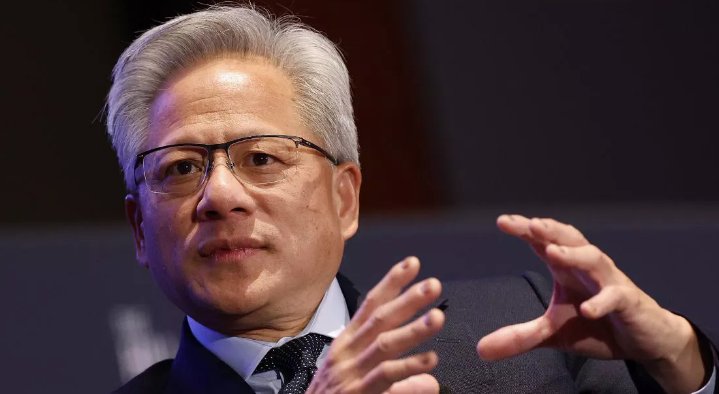
Jensen Huang Wants AI to Move Fast. His Safety Argument Faces a Hard Test
Nvidia chief executive Jensen Huang has pushed back against calls for a broad slowdown in artificial intelligence. In a September 2026 interview with CBS News, he argued that…
Nvidia chief executive Jensen Huang has pushed back against calls for a broad slowdown in artificial intelligence. In a September 2026 interview with CBS News, he argued that development should continue quickly because the technology could deliver major benefits. Yet his position included a condition: companies should not release products they know to be unsafe. The challenge is making that distinction work when the systems themselves are becoming more capable and harder to evaluate.
Huang’s view carries unusual weight. Nvidia makes the chips and computing systems that many AI developers use to train and run their models. A rapid pace of AI investment can benefit his company, so his argument should be understood both as a technology forecast and as the perspective of a leader with a direct commercial stake. That does not settle whether he is right. It makes the evidence behind his claims especially important.
Why Huang rejects a pause
The case for moving forward begins with the possible uses of AI. Better systems may help researchers analyze information, help workers complete repetitive tasks and give small organizations access to capabilities once reserved for larger firms. Progress in health and science is another frequently cited possibility, though a promising tool must be tested in the specific setting where it will be used before anyone can count the benefit as real.
A blanket pause, Huang’s argument suggests, would delay those opportunities. It could also be difficult to enforce across competitors and countries. Research, model training and deployment are different activities, and a single instruction to “slow down” may not say which of them should stop or what evidence would permit them to resume. Supporters of faster development see a more useful path in testing systems, improving safeguards and addressing risks as they emerge.
Critics ask whether that approach can keep pace with the technology. A system can appear reliable in a controlled demonstration and fail when connected to sensitive data, financial tools or real-world operations. More autonomous products can take sequences of actions that are difficult to anticipate. Security vulnerabilities, misleading output and misuse do not disappear simply because a model is useful for ordinary tasks.
Speed and safety are different decisions
Huang’s distinction between continuing research and releasing unsafe products deserves close examination. Developers can keep improving a model while delaying a particular feature or restricting access to a risky capability. They can run independent evaluations, document failures and limit what a system may do without a person’s approval. These choices are more specific than a general debate about whether AI should move fast or slow.
They also require clear thresholds. Who decides when a product is safe enough? What tests reveal dangerous behavior before release? How do companies monitor problems after millions of people begin using a system? If an evaluation finds a serious weakness, will a company accept a costly delay? A credible safety commitment has to answer those questions in operational terms.
The incentive problem is visible throughout the AI market. Developers compete for users and investment. Cloud providers build data centers. Chip suppliers sell the computing power that makes expansion possible. Nvidia’s financial results show how large that market has become. Fast growth does not prove that safety is being neglected, but it raises the stakes when a company argues that the industry should maintain its momentum.
A practical test for the industry
The disagreement is often presented as a choice between progress and caution. In practice, policymakers and companies have more targeted choices. High-risk uses can face stricter testing than ordinary consumer features. Organizations can require human approval before systems take sensitive actions. Researchers can share methods for measuring failures, while independent reviewers can examine claims that a product has passed a safety test.
None of these measures guarantees that every risk will be caught. They do, however, create evidence that outsiders can assess. That matters because both sides of the debate make predictions: Huang about the benefits of continued progress, and critics about harms that may grow as systems advance. Public trust is unlikely to rest on confidence alone.
Huang’s CBS interview captured a central tension of the AI era. The technology may offer substantial gains, and delaying it has costs. Releasing powerful systems before their risks are understood has costs too. The strongest version of his argument is not simply that AI should advance rapidly. It is that rapid development can be paired with decisions to hold back individual products when evidence demands it. The industry now has to demonstrate that it can make those decisions when doing so is inconvenient.
Sources
- CBS News interview with Jensen Huang
- Nvidia second-quarter fiscal 2027 results