
Sam Altman’s Next AI Bet: A New Generation of Entrepreneurs
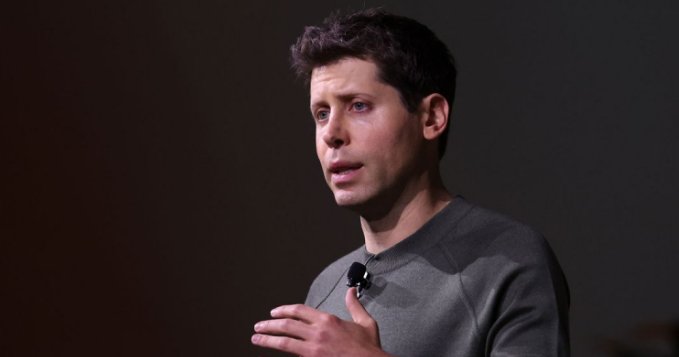
At a G20 innovation meeting in Chapel Hill, North Carolina, Sam Altman offered a vision of artificial intelligence that reaches beyond faster answers and more capable chatbots.…
At a G20 innovation meeting in Chapel Hill, North Carolina, Sam Altman offered a vision of artificial intelligence that reaches beyond faster answers and more capable chatbots. The OpenAI chief executive argued that AI could change who gets to start a business. If a person can use increasingly capable tools to write software, test an idea, prepare a pitch and serve early customers, the distance between an idea and a working company could shrink dramatically.
That prospect helps explain why AI has become an economic issue for governments, not simply a product category for technology companies. The September 2026 G20 discussions covered innovation policy, skills, commercialization, intellectual property and standards. Altman’s participation placed the ambitions of an AI developer beside the practical concerns of ministers trying to understand where growth might come from and who might share in it.
The changing cost of getting started
Launching a company has always required more than a good idea. Founders need to research a market, design a product, build systems, explain their offer, handle routine administration and find paying customers. In a traditional startup, those jobs often require a team or enough capital to hire one. AI tools can help an individual do parts of that work sooner and at a lower initial cost.
Altman has described this shift as a chance for people with strong ideas and a deep understanding of customers to move faster, even if they cannot personally write every line of code. That is a compelling claim, particularly for a prospective founder with expertise in a narrow industry. A small problem that once could not justify a large software budget might become a viable product if development costs fall.
Consider a local business owner who knows exactly where scheduling breaks down in a specialized trade. An AI assistant might help prototype an app, draft instructions, compare competing products and automate some support requests. The owner still has to verify the software, earn customer trust and make the business economics work. But the first experiment may no longer require a large engineering department.
OpenAI’s own research has described millions of U.S. users employing ChatGPT for tasks connected with planning, starting or operating a business. That is evidence of interest and use, though it is not proof that AI alone created successful companies. The distinction matters. Using a tool to explore an idea is easier than building a durable enterprise with satisfied customers and reliable revenue.
Why governments are in the conversation
The G20 setting gave Altman’s argument a public-policy dimension. If AI lowers some barriers to entrepreneurship, governments will still influence whether the opportunity spreads widely. Internet access, affordable computing, practical training and clear rules for using data can affect who gets to experiment. Education systems and workforce programs also determine whether people can evaluate AI output rather than accept plausible mistakes.
The ministers’ innovation statement connected technological adoption with skills and secure, reliable deployment. It also addressed how emerging technology moves from research to commercialization. Those priorities reflect a broader reality: more powerful models do not automatically translate into broad economic growth. Businesses need to integrate the tools into real processes, while customers need confidence that the results are accurate and their information is protected.
Intellectual property is another unresolved part of the equation. Entrepreneurs may use AI to create designs, text or code, while artists and other rightsholders want their work protected. The G20 statement recognized that existing laws and national approaches still have to address difficult questions about AI development and use. A market that founders can trust will depend partly on how those questions are settled.
The promise and the pressure test
Altman’s message is attractive because it describes a practical benefit people can imagine: a person with an overlooked idea gets the tools to try it. Yet there are limits. AI-generated code can fail, market research can be wrong and an impressive demonstration may not survive real-world use. Running a company still involves judgment, responsibility, sales and the ability to keep promises to customers.
There is also a distribution question. If the best systems remain expensive or if access to computing and training is uneven, the gains could concentrate among people and firms that already have resources. Cheaper creation may increase competition, too. When many people can build a first version quickly, finding a genuine customer need and delivering a trustworthy product become even more valuable.
The next stage of AI will therefore be judged less by how many business ideas it can generate than by how many useful ventures people can sustain. Altman’s G20 appearance framed a possibility: technical talent may no longer be the only scarce ingredient at the beginning of a company. Whether that possibility turns into a wider wave of entrepreneurship will depend on dependable tools, thoughtful policy and founders who know what problem is worth solving.
Sources
- White House account of the G20 Innovation Ministerial
- G20 Innovation Ministerial statement
- OpenAI research on small-business use of AI
- Altman interview at the G20 meeting, Axios