
Trump’s GB News Interview and the Questions Facing American Foreign Policy
Donald Trump’s interview with GB News placed a familiar style of presidential communication in an international setting. Speaking with presenter Bev Turner, he addressed major…
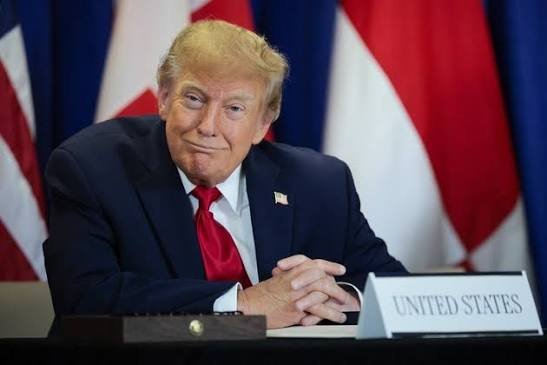
Donald Trump’s interview with GB News placed a familiar style of presidential communication in an international setting. Speaking with presenter Bev Turner, he addressed major disputes involving the United States and explained how he sees Washington’s role abroad. One prominent subject was Iran and the American effort to prevent it from obtaining a nuclear weapon. The conversation also ranged across British political controversies, artificial intelligence and climate change. It offered a view of Trump’s priorities, but raised a larger question: how should allies and adversaries interpret public statements made during a fast-moving crisis?
For a U.S. president, an interview with a British outlet reaches more than a domestic audience. Officials in Europe, investors and governments involved in a dispute all listen for signals about what the United States might do next. The words can shape expectations even when they are not a formal policy document or a negotiated agreement. That makes the setting part of the story.
The power of a direct message
Trump has long favored forceful, personal explanations of foreign policy. In an extended interview, that approach gives him room to describe his own priorities without the tight format of a short press exchange. Viewers can hear the emphasis he puts on American interests, security concerns and the conduct of other governments. They can also see where questions remain unanswered.
The discussion of Iran illustrates the difficulty. Preventing a nuclear-armed Iran is a stated U.S. goal, but achieving it involves choices about diplomacy, sanctions, military pressure and verification. These tools carry different costs and risks. A president may convey determination in an interview; governments and citizens still need to know what concrete steps are being taken, what outcomes are being sought and how those outcomes could be checked.
That distinction between a message and a policy is essential. An interview can show how Trump frames a problem. Formal decisions, official statements and actions by U.S. agencies establish what the government is doing. In a crisis, those sources should be read together rather than treating any single remark as a complete blueprint.
Why the British audience matters
GB News serves an audience in a country with a longstanding security and diplomatic relationship with the United States. American decisions on conflict, sanctions and trade can affect British and European interests directly. A U.S. president choosing a British platform is therefore also speaking to people who may judge the costs of Washington’s choices from outside the United States. His comments on London Mayor Sadiq Khan and on the Chagos Islands question showed how readily an international interview can enter domestic British debates.
The broader transatlantic relationship depends on more than warm statements between leaders. Allies must coordinate on intelligence, defense planning and economic policy, often while disagreeing over particular tactics. A public interview can reassure some listeners and unsettle others, especially if it leaves the timetable or conditions for a decision unclear. The practical test is whether officials can turn high-level language into consistent cooperation.
His discussion of AI and the global economy raised another issue for allies. Governments and businesses need to understand where they may cooperate on emerging technology and where competition will make common rules harder. Trade restrictions can be presented as tools to defend domestic industry or gain bargaining power, but their effects run through supply chains, investment and consumer prices. Trading partners need to know which measures are proposals, which are in force and what would cause them to change. Those details cannot be inferred from rhetoric alone.
What to watch after the interview
The significance of Trump’s conversation lies partly in the attention it draws to American intentions. It gives audiences a direct account of the president’s thinking at a moment when U.S. choices carry global consequences. Its limitations are equally clear: interviews compress complicated conflicts into answers shaped by the questions and the time available.
The next useful evidence will come from official decisions and the responses of other governments. On Iran, that means watching diplomatic contacts, public U.S. policy statements and developments that can be independently verified. On economic matters, it means examining actual rules and their dates rather than assuming that a broad political position has already become law. For allies, the important measure is whether coordination holds when immediate interests diverge.
Trump’s GB News appearance is a reminder that the president’s public words can move an international debate before a formal decision is announced. Understanding what they mean requires a second step: separating the priorities expressed in the interview from the policies that follow. That is where the interview’s political impact will ultimately be measured.
Sources
- GB News: Donald Trump’s interview with Bev Turner